WaveNeuro
Making complex EEG workflows
easier to navigate.
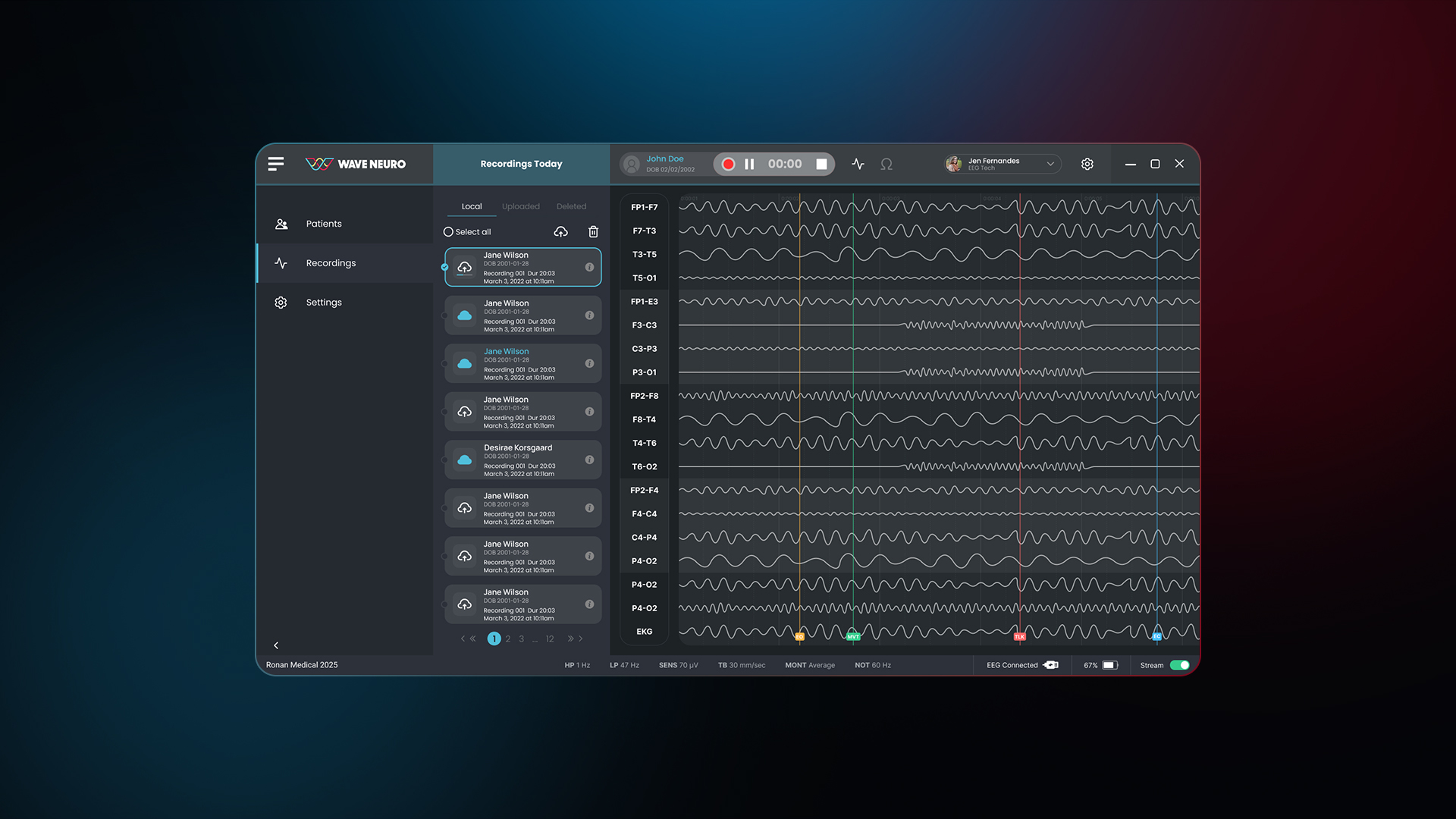
WaveNeuro is an EEG recording and management application by Ronan Medical, bringing patient management, recordings, signal controls, and electrode monitoring into one connected workspace.
Role
Product Designer
Scope
Dashboard UX/UI · Component-Based UI
Context
EEG software needs to surface a large amount of technical information while supporting multiple tasks around it.
WaveNeuro needed a clearer way to move between patients, recordings, signal settings, and system controls without making the core workspace feel fragmented.
The problem
How do you simplify a dense
technical interface without
hiding important information?
Users need to manage different parts of the workflow while continuously staying aware of the EEG signal and recording status.
The challenge was to organize these tools around the primary workspace without creating unnecessary context switching.
What I worked on
I designed and refined the dashboard experience across the main WaveNeuro workflows, including:
- Patient management
- Local and cloud recordings
- EEG recording controls
- Signal and marker settings
- Impedance monitoring
- System states and modals
- Reusable UI components
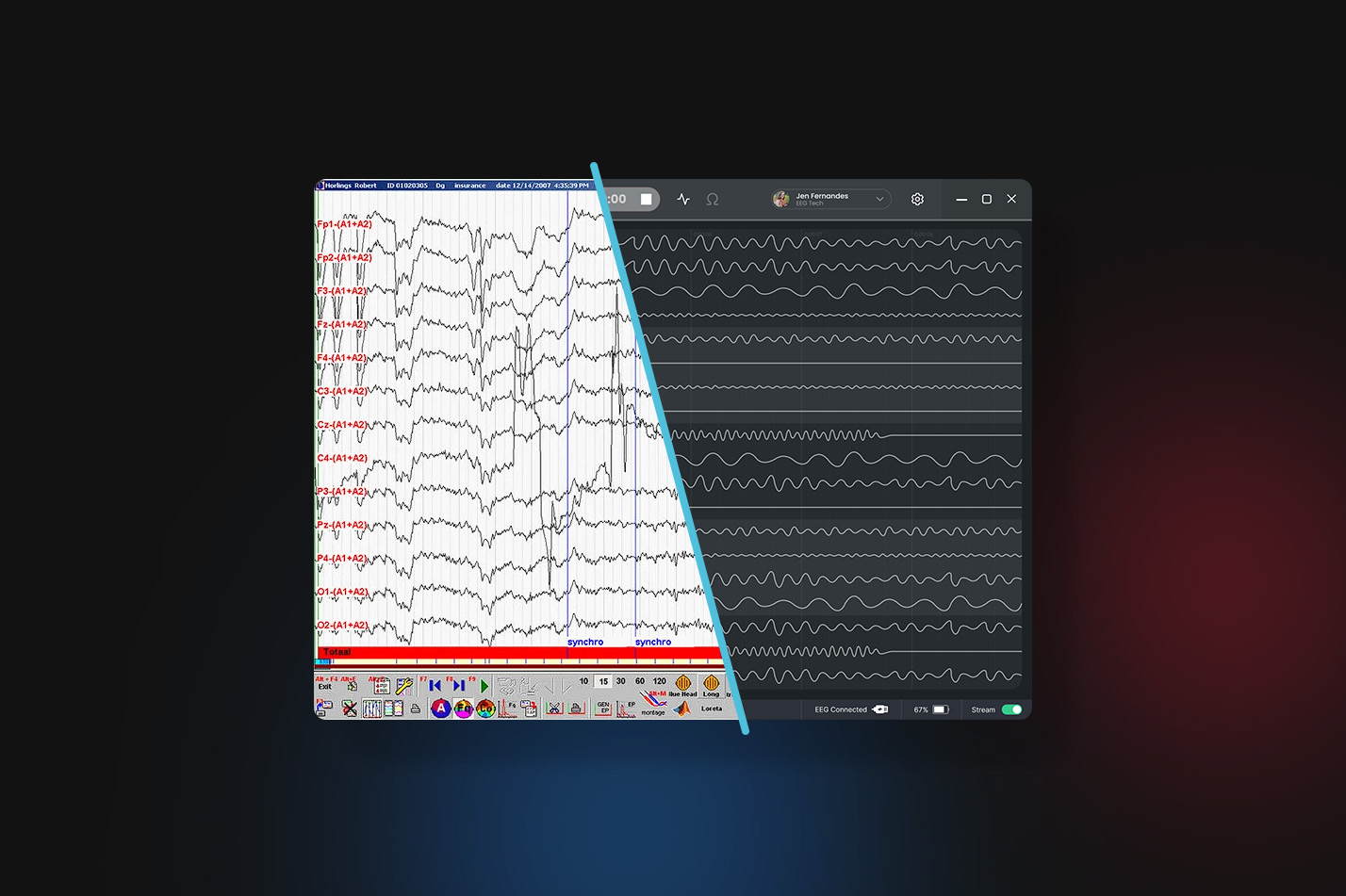
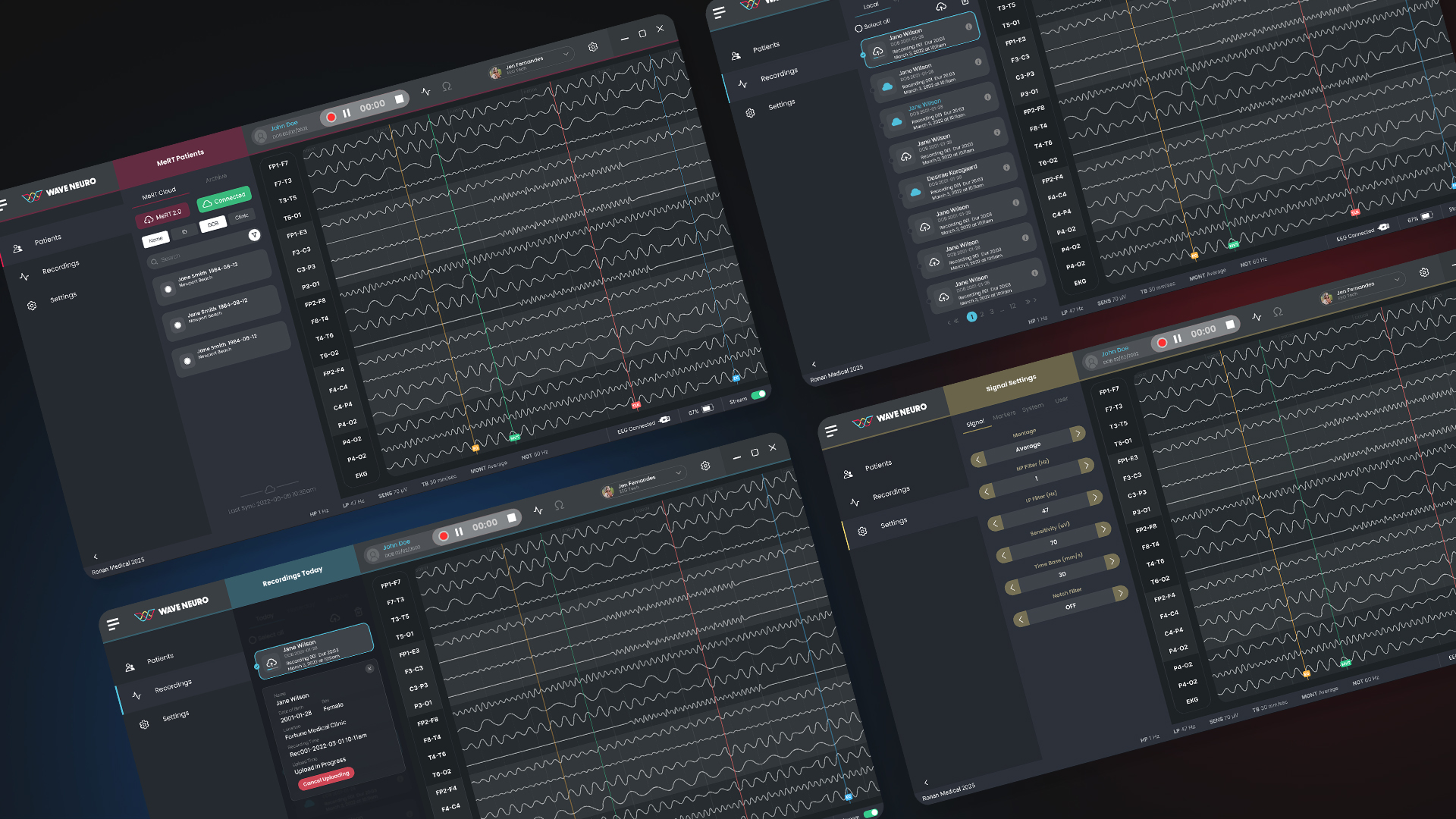
Keep the signal at the center.
The EEG visualization remains the primary workspace while supporting tools open around it.
Patients, recordings, and settings are handled through structured side panels, allowing users to change context without losing visibility of the signal.
Separate tasks without separating the experience.
Instead of treating each function as an isolated screen, the interface uses a consistent navigation and panel structure across Patients, Recordings, and Settings.
This keeps complex workflows predictable while reducing the amount of interface users need to relearn.
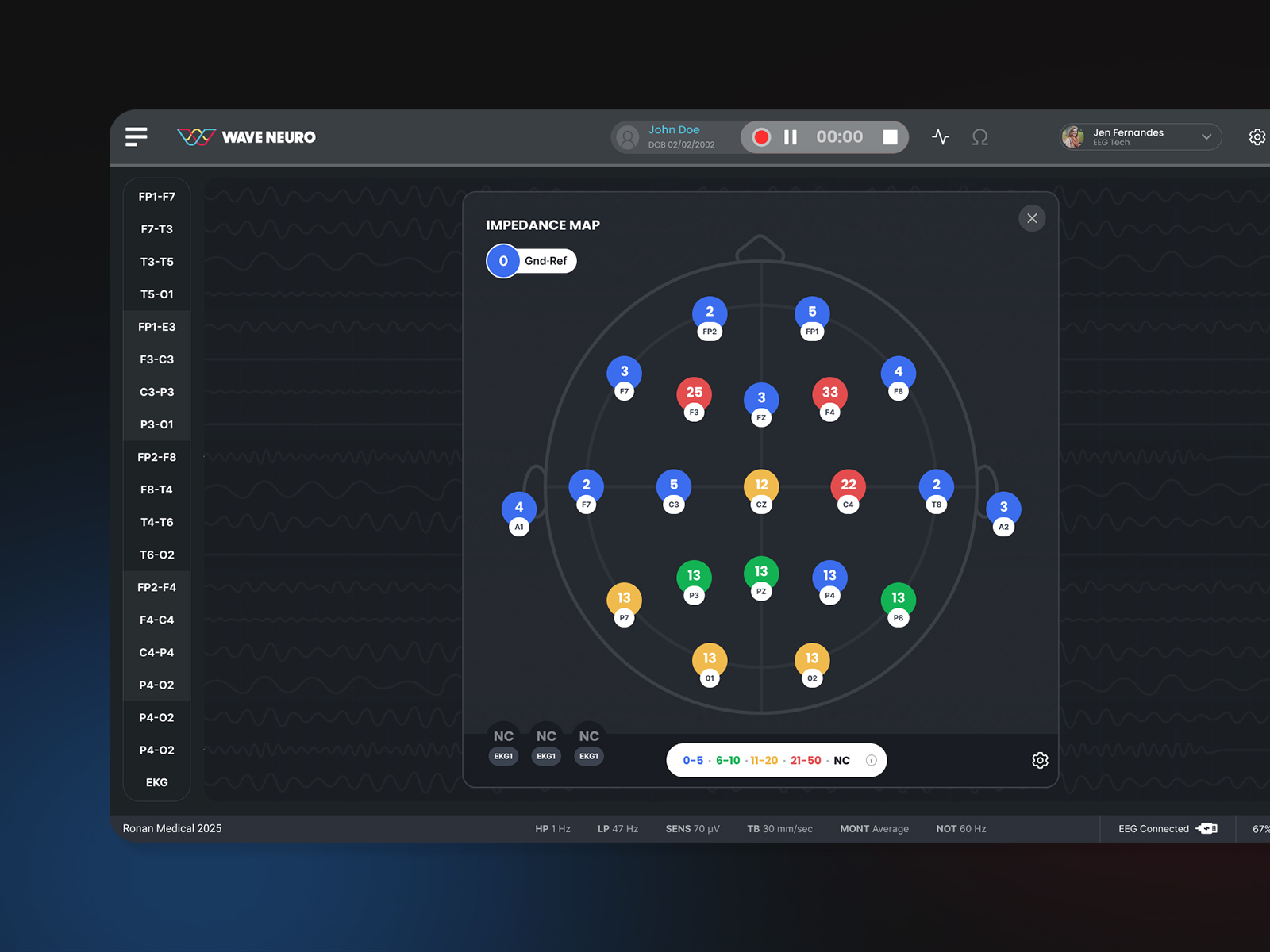
Make technical status easier to scan.
Information such as electrode impedance is highly detailed, so it needed more than a list of values.
A visual impedance map uses position, labels, and status colors to turn complex electrode information into something users can understand at a glance.
Building the dashboard
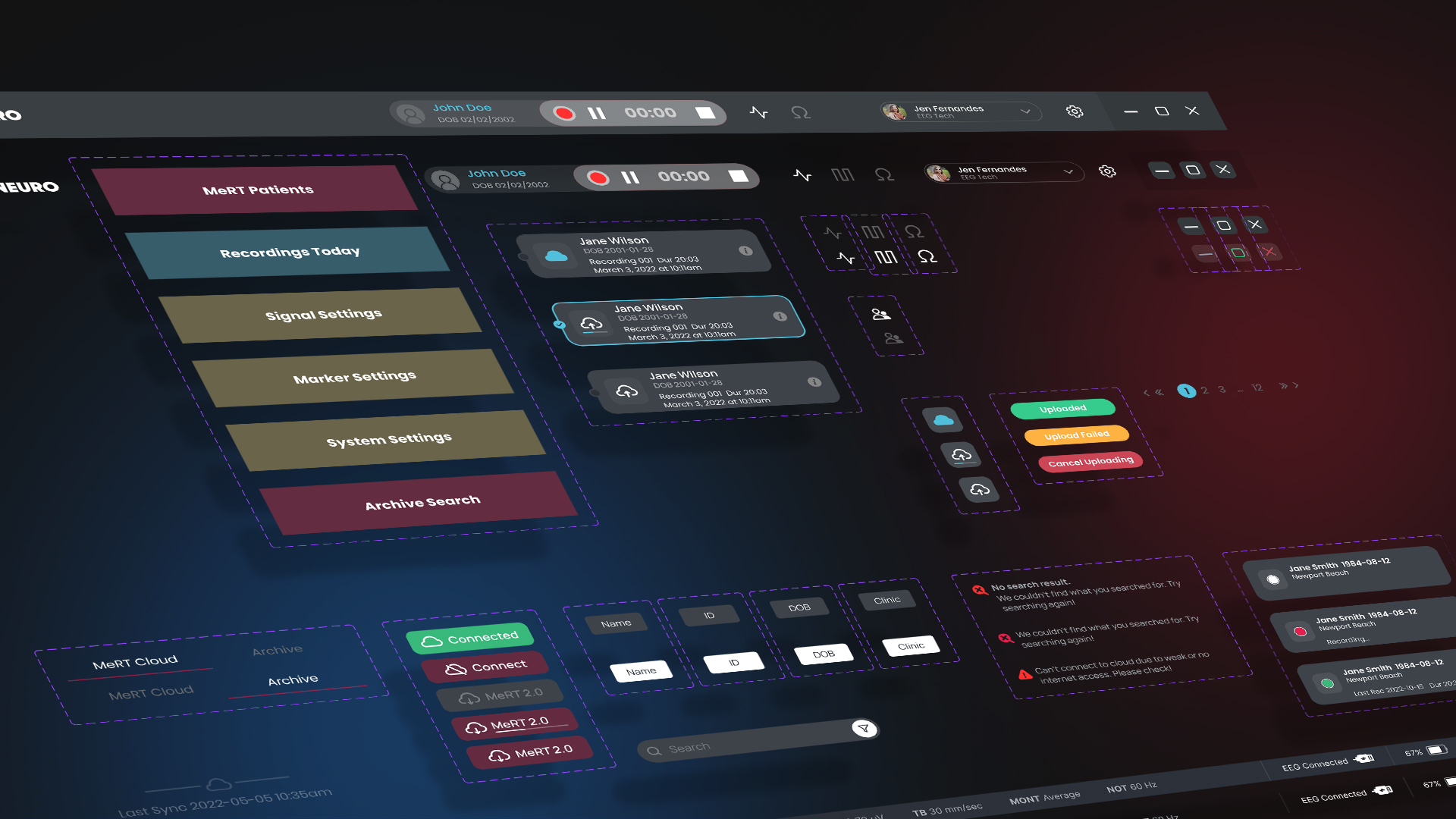
Reusable by default.
The dashboard was built using reusable components for navigation, patient cards, recording controls, settings, status indicators, modals, and other repeated interface patterns.
This helped maintain consistency across a large number of screens and interaction states while making repeated interface elements easier to manage and update.
The goal wasn't to create a separate design-system deliverable—it was to build a consistent and reusable product interface.
The outcome
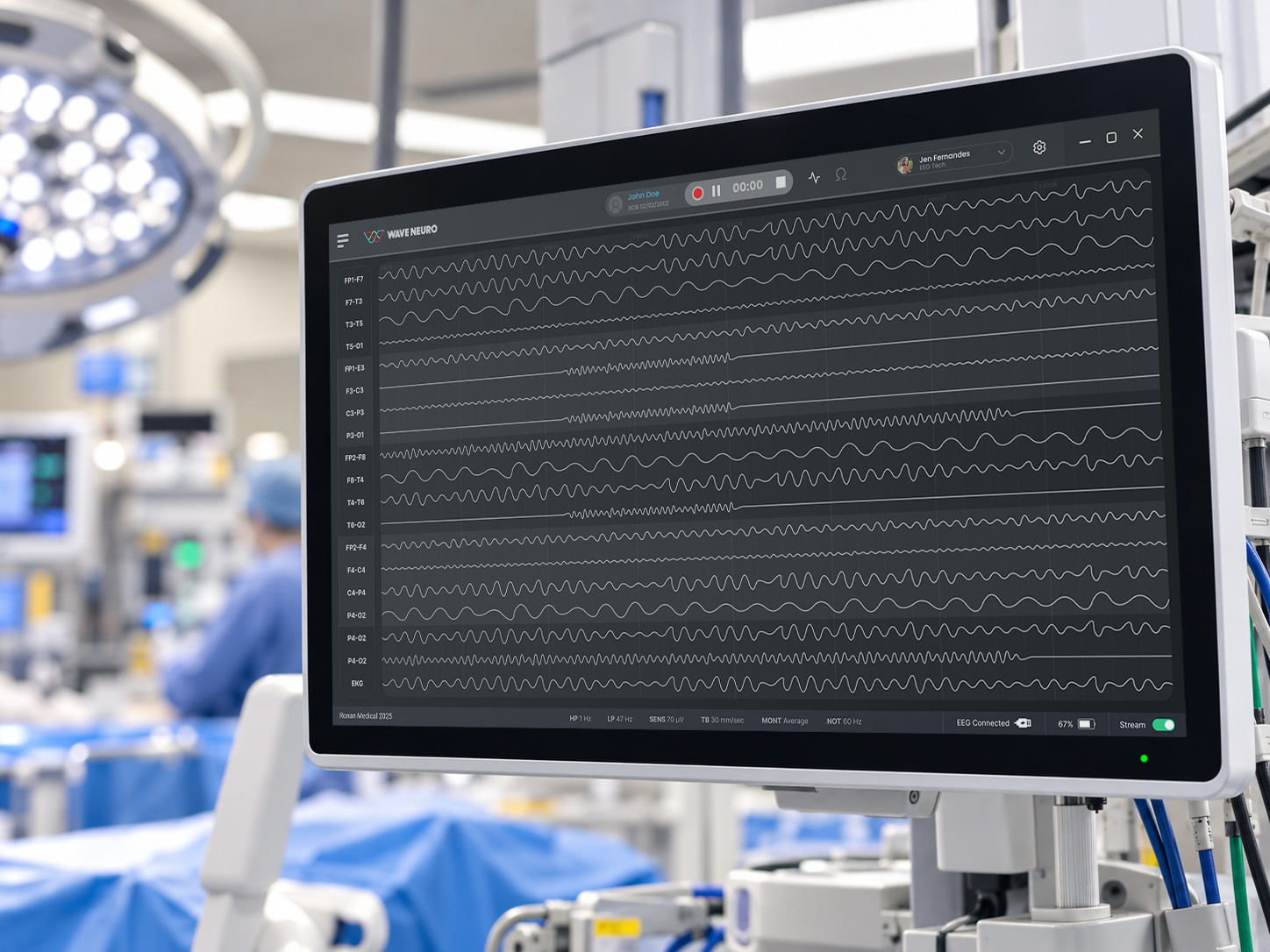
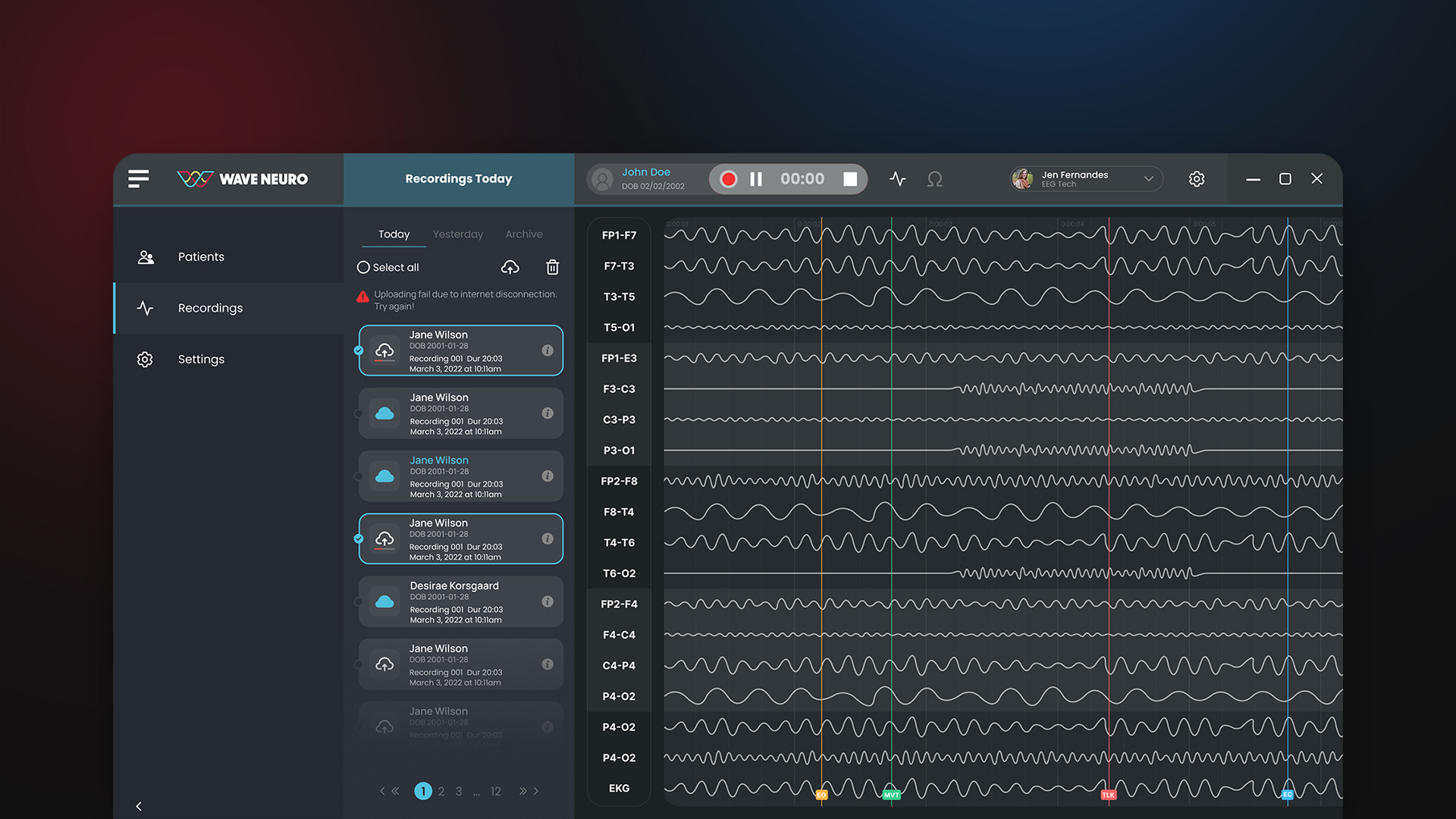
WaveNeuro brings several technical workflows into one consistent operational interface while keeping the EEG signal as the visual anchor.
The result is a dashboard where patients, recordings, settings, and signal monitoring work together instead of competing for attention.
Next project
FortisHD→